Flaking in Your Beard Isn't Dry Hair : It's Your Skin. Here's How to Fix It.
You see white flakes in your beard and reach for beard oil. Maybe you add more balm. Maybe you brush harder and hope the problem disappears.
That approach misses the real target.
Beard flakes come from the skin underneath your beard: not the beard hair itself. Your facial hair simply traps the flakes, hides the irritated skin, and makes it harder to treat. Most men focus on coating the hair while the skin underneath stays dry, clogged, stripped, or irritated.
That is why the fix starts at the roots.
If you are asking, “Why is my beard flaking?”, “Why does my beard itch?”, or “How do I moisturize the skin under my beard?”, the answer is usually a better skin-first routine.
What beard flakes actually are
Your beard hair does not produce dandruff. The skin beneath it does.
When that skin becomes too dry, irritated, or overloaded with product and dead skin cells, it sheds. Those flakes get caught in the beard and show up on your shirt, collar, or bathroom sink.
Some flakes are fine and white. Others may look greasy, yellowish, or appear with redness and persistent itching. Men often call all of it beardruff, but the cause can vary.
Common causes include:
- Dry skin and a weakened skin barrier
- Product and sweat buildup
- Harsh cleansers that strip natural oils
- Dead skin trapped beneath dense facial hair
- Overwashing or washing with water that is too hot
- Fungal or yeast overgrowth associated with seborrheic dermatitis
- Cold, dry weather and indoor heating
The important distinction is simple: the beard is not the source of the flakes. It is the cover over the source.
Why your beard routine may be making it worse
A lot of beard routines treat facial hair like the main problem. Men shampoo aggressively, scrub the beard, rinse with hot water, and then rake oil across the surface.
That can leave the hair feeling softer while the skin underneath remains neglected.
Harsh cleansers strip the skin
Body wash, strong bar soap, and regular shampoo can remove too much of the skin’s natural oil. That leaves the skin tight, dry, and more likely to flake.
The same thing happens when you wash too often. Clean does not mean stripped. Your goal is to remove sweat, dirt, and buildup without damaging the skin barrier.
Buildup gets trapped
A beard collects more than hair. Sweat, skin oil, dead cells, food particles, styling products, and environmental grime can settle close to the skin.
If you never clear that buildup, oil and balm sit on top of a dirty foundation. The beard may smell stale, feel heavy, and continue itching even after you apply more conditioning products.
Oil stays on the hair
This is the most common mistake.
A man applies beard oil by rubbing it between his palms and dragging it over the outside of the beard. The hair gets glossy. The skin gets almost nothing.
If your fingertips never touch the skin beneath your beard, you are not fully moisturizing the area that needs it most.
The skin-first fix for beardruff
You do not need a complicated routine. You need to put each product in the right place and use it consistently.
1. Clear the buildup with a beard detox
Start with a clean base. A beard detox helps remove the buildup that regular rinsing can leave behind, including excess oil, product residue, and dead skin trapped beneath the beard.
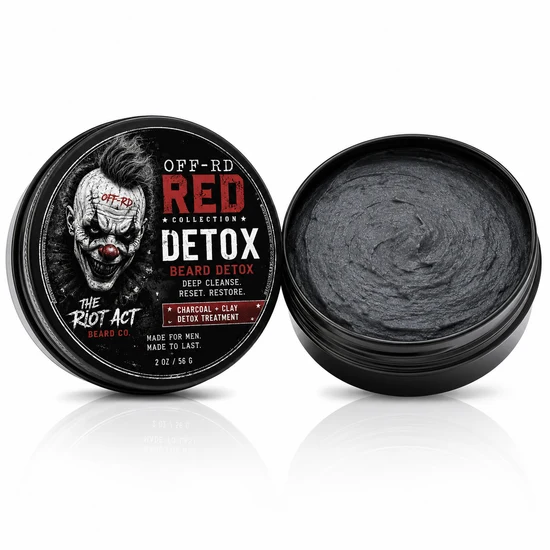
The Off Road Red Beard Detox is built for this first step. Use it when your beard feels coated, itchy, heavy, or difficult to refresh. Work the product through the beard and down toward the skin, rather than scrubbing only the outer layer.
Use your fingertips to massage the product into the roots. Keep the pressure controlled. Scrubbing harder does not mean cleaning better; it can further irritate already-dry skin.
Rinse thoroughly with lukewarm water. Hot water can strip the skin and leave it feeling tighter after the shower.
You do not need to detox every day. Use it as a reset when buildup becomes noticeable or as part of a regular weekly routine, depending on your beard, skin, and product use.
2. Apply beard oil directly to the skin
After cleansing, lightly towel-dry your beard. It should be damp, not dripping wet.
Take a few drops of Off Road Red Beard Oil and warm the oil between your fingertips. Then separate the beard with your fingers and press the oil into the skin underneath.
Do not just rake your hands across the surface.
Use your fingertips to work along:
- The cheeks beneath the beard
- The jawline
- The underside of the chin
- The mustache area
- Any spots that feel tight or itchy
Once the skin is covered, use what remains on your hands to smooth the oil through the beard hair. This gives you the correct order: skin first, hair second.
The goal is not to soak the beard. Start with a small amount and add more only if your skin and beard need it. Your beard should feel conditioned, not greasy.
This technique is the answer to one of the most important questions in beard care: how do you moisturize skin under a beard? You make contact with the skin instead of treating the hair like a curtain you can only polish from the outside.
3. Seal in the conditioning with beard balm
Beard oil adds conditioning. Balm helps hold that conditioning in place while giving the beard light control.
Warm a small amount of beard balm between your fingers until it softens. Press a thin layer into the beard, again starting close to the skin. Then distribute it through the hair and shape as needed.
Do not use a heavy layer to bury flakes. That can create more buildup and make the problem harder to diagnose. Balm works best as a finishing layer, not a substitute for cleansing.
The Off Road Red Beard Balm pairs naturally with the Off Road Red Beard Detox and Beard Oil when you want one consistent scent profile from wash day through styling.

4. Do not overwash
Your beard needs regular cleansing, but more washing is not always better.
Wash when the beard is dirty, sweaty, oily, or carrying noticeable product. For many men, that means a few times per week rather than repeated aggressive washing every day. If you work outdoors, train often, or deal with heavy sweat and grime, you may need to cleanse more frequently: but keep the process gentle.
Use lukewarm water. Avoid long, hot showers. Rinse thoroughly so cleanser and detox product do not remain against the skin.
The right routine removes buildup without leaving the skin stripped and tight.
5. Brush and exfoliate with control
A beard brush can help lift loose flakes, spread oil, and keep buildup from sitting in one place. Use it after applying oil, with enough pressure to reach the beard without scratching the skin.
Avoid attacking irritated skin with aggressive brushing, sharp tools, or harsh scrubs. If your skin is already inflamed, more friction can make the itching worse.
A controlled brush-through is useful. Sandpaper treatment is not.
What if the flakes are caused by fungal overgrowth?
Not every case of beardruff is simple dryness.
Seborrheic dermatitis can cause itching, redness, and greasy or yellowish flakes. It is associated with an imbalance involving Malassezia yeast, which naturally lives on the skin. Harsh cleansing can irritate the skin, while heavy buildup can create an environment where symptoms continue.
A beard detox, proper cleansing, and skin-first moisturizing routine can help improve the condition of your beard and reduce buildup. However, grooming products are not a substitute for medical treatment.
See a dermatologist or healthcare professional if you have:
- Persistent redness or thick scaling
- Painful bumps, swelling, or pus
- Patchy hair loss or broken beard hairs
- Severe itching that does not improve
- Symptoms that keep returning despite a consistent routine
You may need a medicated antifungal or another targeted treatment.
Choose the scent personality that fits your routine
Off Road Red is the rugged, unapologetic starting point: bold, dirty, and built for men who want their grooming routine to make a statement.
If your style leans industrial and work-worn, Diesel & Iron brings a smoky, steel-and-grit personality to the same skin-first approach.

For something darker and quieter, Widow Maker delivers a more dangerous presence without needing to announce itself.
The scent can change. The method does not: cleanse the foundation, reach the skin, condition with oil, and finish with balm.
The bottom line
If your beard is flaking, stop treating only the hair.
The flakes are coming from the skin underneath. Clear away buildup with a beard detox. Use your fingertips to work beard oil down to the skin. Seal and shape with balm. Brush with control, avoid overwashing, and pay attention to signs that point beyond ordinary dryness.
Start with the Off Road Red Beard Detox and Off Road Red Beard Oil as your core pair. Build the routine around the skin, not just the beard you can see.
That is how you get past beardruff: and back to a beard that looks deliberate, feels better, and carries itself with confidence.